
Vinyl Flooring Explained
Vinyl flooring has become one of the most popular choices for both homes and commercial spaces – and for good reason. It offers the look of wood or stone, a softer feel underfoot, and the kind of durability that suits everyday life.
But while most people focus on the finish, colour, or plank style, the real success of a vinyl floor starts well before the first plank goes down.
This guide covers everything you need to know: the main types of vinyl flooring, where each one works best, how installation works, and why surface preparation is the step that makes or breaks the result.
What Is Vinyl Flooring?
Vinyl is a resilient flooring option made from synthetic materials, designed to be stylish, practical, and easy to live with. It replicates the appearance of natural materials – timber, stone, concrete – at a fraction of the cost and with considerably better moisture and wear resistance.
It performs particularly well in spaces that need to balance appearance with practicality: living areas, bedrooms, kitchens, offices, retail environments, and hospitality settings all benefit from what vinyl offers.
Types of Vinyl Flooring: LVT, LVP, and Sheet Vinyl
Not all vinyl flooring is the same. Understanding the differences between the main formats helps you choose the right product for your space.
Luxury Vinyl Tile (LVT)
LVT comes in tile formats that mimic stone, concrete, or ceramic. It is well-suited to kitchens, bathrooms, and commercial settings where a tile aesthetic is preferred but the warmth and comfort of vinyl is still desired. LVT is dimensionally stable, making it a strong choice in areas with fluctuating temperatures.
Luxury Vinyl Plank (LVP)
LVP replicates timber in plank form and is one of the most popular flooring choices on the market. It delivers the warm, natural look of wood with none of the maintenance requirements. LVP works well in living areas, bedrooms, and open-plan spaces where a timber aesthetic is the goal.
Sheet Vinyl
Sheet vinyl comes in continuous rolls, making it a seamless option for bathrooms, laundries, and utility areas where water resistance and easy cleaning are priorities. Because it has no joints, there are fewer points where moisture can penetrate — an advantage in wet areas.
Wear Layer and Thickness: What to Look For
Two specifications matter most when choosing a vinyl product: overall thickness and wear layer thickness.
Overall thickness affects how the floor feels underfoot and how well it conceals minor subfloor imperfections. Thicker planks (6mm and above) tend to feel more substantial and perform better over less-than-perfect surfaces.
The wear layer is the protective coating on top of the plank that determines how well the floor resists scratches, scuffs, and daily wear. For residential spaces, a wear layer of 0.3mm to 0.5mm is typically appropriate. For commercial environments with higher foot traffic, 0.5mm and above is recommended.
How Vinyl Flooring Is Installed: Click-Lock vs. Glue-Down
There are two primary installation methods for vinyl flooring, and the right choice depends on the product type, the subfloor condition, and the intended use of the space.
Click-Lock (Floating) Installation
Click-lock vinyl planks or tiles connect to each other via an interlocking edge system and over the subfloor without adhesive. This method is faster to install and can be more forgiving on slightly uneven surfaces.
Glue-Down Installation
Glue-down installation bonds the vinyl directly to the subfloor using adhesive. This method produces a more rigid, stable result — particularly important in commercial settings or areas with heavy rolling loads. It requires a well-prepared, smooth subfloor, as any imperfection in the surface will be transmitted through the vinyl.
Why Surface Preparation Is Critical for Vinyl Flooring
One of the most important — and most overlooked — aspects of a successful vinyl installation is what happens before the first plank is laid.
Vinyl does not hide a bad surface. It reveals it.
If the floor beneath is rough, uneven, cracked, or unstable, those imperfections will telegraph through the vinyl over time — affecting both the appearance and the longevity of the floor. This is especially true of thinner vinyl products and glue-down installations.
What Is Screed and When Is It Needed?
Screed is a levelling compound applied to the subfloor prior to installation. It fills dips, smooths rough patches, corrects minor cracks, and creates the flat, stable surface that vinyl needs to perform correctly.
While screed is not visible in the finished floor, it plays a significant role in the quality of the final result. A properly screeded subfloor helps vinyl look better on installation day and hold up under daily use over the long term.
At Cape Tiles, surface preparation is considered a non-negotiable part of the process. The final result is only as good as the foundation it sits on.
Where Vinyl Flooring Works Well
Vinyl is a smart option for a wide range of residential and commercial spaces. In homes, it performs well in living areas, bedrooms, studies, and kitchens. In commercial settings, it is well-suited to cafés, offices, retail spaces, and hospitality environments where the flooring needs to look polished while handling consistent foot traffic.
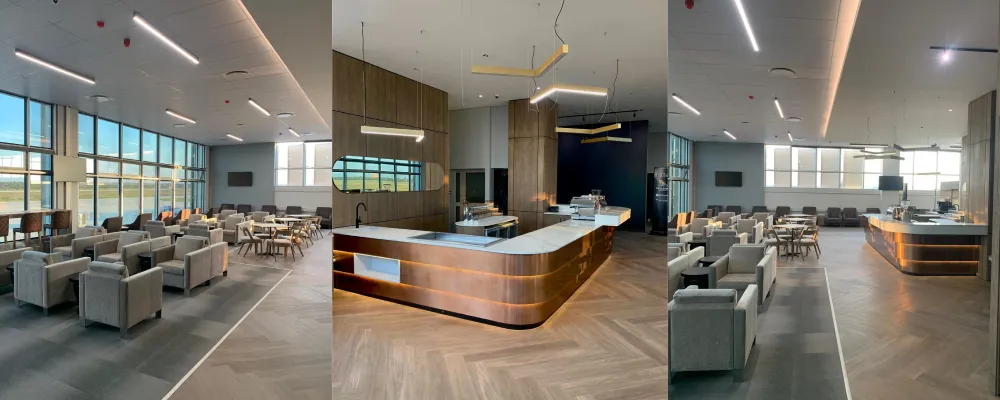
Cape Tiles has seen this first-hand in projects like Vida eCafé and Discovery Lounge, where vinyl was specified to create a clean, modern aesthetic while meeting the practical demands of busy commercial environments.
Vinyl Flooring and Underfloor Heating
Many vinyl products are compatible with underfloor heating systems, but not all. Before specifying vinyl over a heated screed, it is important to confirm the product’s maximum temperature rating — typically 27°C surface temperature for most LVT and LVP products — and to ensure the heating system is commissioned and stabilised before installation begins.
Moisture is also a consideration worth checking early. Concrete subfloors in particular can retain residual moisture that, if not properly managed, can cause adhesion failure or floor movement over time. A moisture barrier or moisture-tolerant adhesive is often recommended in these situations.
Why Expert Guidance Matters
A successful vinyl floor is never just about choosing the right colour or plank format. It is about choosing the right product for the application, preparing the surface correctly, and making sure the installation is executed on the right foundation.
That is where Cape Tiles adds real value. We help customers understand how the full flooring system works — from product selection to preparation and installation support — so the result not only looks good on day one but continues to perform well over time.
Frequently Asked Questions About Vinyl Flooring
Is vinyl flooring waterproof?
Most LVT and LVP products are water-resistant to highly water-resistant, making them suitable for kitchens, bathrooms, and laundries. However, the subfloor and installation method also affect overall moisture performance. Sheet vinyl offers the most complete water resistance due to its seamless format.
How long does vinyl flooring last?
With correct installation and surface preparation, quality vinyl flooring can last 15 to 25 years in residential settings. Commercial environments with higher wear may see a shorter lifespan, which is why specifying the correct wear layer thickness for the application matters.
Do I need underlay with vinyl flooring?
This depends on the product and subfloor. Some vinyl planks come with an integrated underlay already attached. Others require a separate underlay for acoustic performance or added comfort. Glue-down products do not use underlay. Always confirm the manufacturer’s recommendation for the specific product being installed.
